

-
History of:
- Resources about:
- More:
- Baby walkers
- Bakehouses
- Bed warmers
- Beer, ale mullers
- Besoms, broom-making
- Box, cabinet, and press beds
- Butter crocks, coolers
- Candle snuffers, tallow
- Clothes horses, airers
- Cooking on a peat fire
- Drying grounds
- Enamel cookware
- Fireplaces
- Irons for frills & ruffles
- Knitting sheaths, belts
- Laundry starch
- Log cabin beds
- Lye and chamber-lye
- Mangles
- Marseilles quilts
- Medieval beds
- Rag rugs
- Rushlights, dips & nips
- Straw mattresses
- Sugar cutters - nips & tongs
- Tablecloths
- Tinderboxes
- Washing bats and beetles
- Washing dollies
- List of all articles
Subscribe to RSS feed or get email updates.
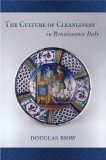
The Culture of Cleanliness in Renaissance Italy
from Amazon.com
Or from Amazon UK

...a collection of 34 small vignettes of everyday life painted by Pietro Longhi..... The working class is represented as well: spinners and laundresses; a woman who sells fritole, a fried dumpling, and a housewife turning out a potful of polenta.
Alberta Eiseman, in the New York Times, July 1988
Washing boards in Italy
Laundresses in Venice, Bologna and beyond
 Regular readers will
see from these 18th century Venetian pictures that we are once again looking for
ancestors of the classic 19th and 20th century grooved washboard. These washerwomen
using boards were painted by Pietro
Longhi around 1740, nearly 100 years before the metal ridged
washboard was invented in the USA.
Regular readers will
see from these 18th century Venetian pictures that we are once again looking for
ancestors of the classic 19th and 20th century grooved washboard. These washerwomen
using boards were painted by Pietro
Longhi around 1740, nearly 100 years before the metal ridged
washboard was invented in the USA.
Similar boards, supported on legs, were still in use in the Venice region in the mid-20th century. Boards were also used for riverside washing, like the French box and board.

More than a century before Longhi's "washboards", a woodcut illustration from Bologna shows two washerwomen with a board balanced across a big tub.
 These Italian boards don't seem
to have had grooves cut into them. The earliest ridged washboards were from Scandinavia,
according to Edward Pinto, an expert on hand-made domestic woodenware.
These Italian boards don't seem
to have had grooves cut into them. The earliest ridged washboards were from Scandinavia,
according to Edward Pinto, an expert on hand-made domestic woodenware.
Scrubbing boards were not used by everyone doing laundry in every region of Italy. Stone blocks built into a wash-house or riverside rocks were two possible alternatives.
The lavandaia [laundress] is the person who knows all about "dirty linen, soap, ashes, the soap and water mixture for the prewash, the lye (both soft and strong), the washing boards, the washing horses, the drainers, the washtub, the laundry basins, the cauldrons, the little furnaces, and the skimmers......"
Douglas Biow, translating and quoting Alessandro Citolini's La tipocosmia (Venice 1561) in The Culture of Cleanliness in Renaissance Italy, 2006
The picture on the right comes from Longhi's The Washerwomen; the one on the left is The Washerwoman (La Lavandaia).

Also about boards and laundry:
When was the washboard invented?
French laundry boards
 13 February 2008


You may like our new sister site Home Things Past where you'll find articles about antiques, vintage kitchen stuff, crafts, and other things to do with home life in the past. There's space for comments and discussion too. Please do take a look and add your thoughts. (Comments don't appear instantly.)
For sources please refer to the books page, and/or the excerpts quoted on the pages of this website, and note that many links lead to museum sites. Feel free to ask if you're looking for a specific reference - feedback is always welcome anyway. Unfortunately, it's not possible to help you with queries about prices or valuation.